

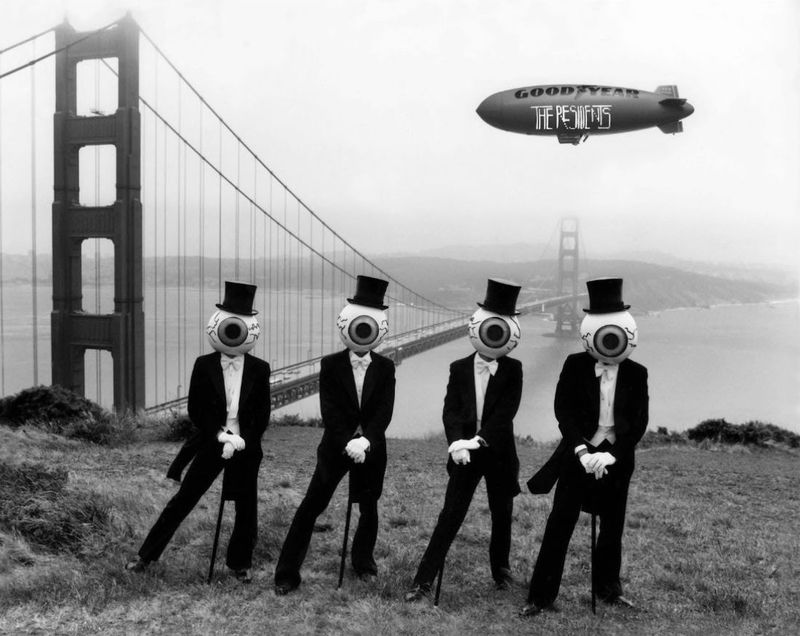
For over five decades, The Residents have challenged the boundaries of experimental music, visual art and performance, building a singular universe defined by sonic experimentation, unconventional storytelling and enduring anonymity. With the Eskimo Live! tour bringing their landmark 1979 album to the stage in an immersive theatrical production, we spoke with Homer Flynn, longtime spokesperson, art director and co-founder of The Cryptic Corporation, about the album’s evolution, the creative philosophy behind the collective, the value of artistic originality and the freedom to remain outside conventional definitions. From Wormwood to Eskimo, the conversation explores what keeps The Residents’ restless, uncompromising vision alive after more than 50 years.
I had the chance to see The Residents live in Athens in 1999, during the Wormwood tour at the Lycabettus Theatre. Looking back from 2026, what has changed most about the way The Residents approach live performance and their relationship with the audience?
I don’t know that much has changed in the relationship between The Residents and their audience since 1999. What has changed is that touring for a relatively small act like The Residents has gotten much more difficult from a financial point of view. Guarantees are not much bigger but expenses are sky high. It’s a difficult time.
That 1999 performance felt like something considerably beyond a conventional concert. Is there still a core philosophy behind a Residents live performance that remains unchanged after all these years?
The Residents’ values are as much about theater and visuals as they are about music. They feel that it’s important that they give the audience something to see and think about, as well as hear. The Residents exist in a narrow space between concert and theater and that unclassifiable niche has gotten harder to support. The culture seems to increasingly like easy categories.
After 45 years of mystery surrounding ‘Eskimo‘, what finally convinced The Residents that now was the right moment to bring the album to the stage in its entirety?
In March of 2025 The Residents were asked to be the closing act in an event called A Night of Ideas. They didn’t have anything performance ready at that time, but, after a little thought, they decided to revisit ‘Eskimo‘ and rework and experiment with one of their favorite albums. Since the event only wanted 20 minutes, The Residents felt like the 1979 album was a perfect unspoiled source for exploration and it came together effortlessly. A few months later they were asked to be the headliner at Exotikon, e festival in Los Angeles and again, it came together easily. The show has continued to build momentum from there.
The announcement describes Eskimo Live! as an immersive theatrical production. What can audiences experience on stage that they couldn’t experience simply by listening to the original album?
Not only is video projected throughout the performance but after realizing that the album wasn’t quite long enough for a concert set, The Residents began researching Eskimo or Inuit culture but, in contrast to the 1970’s when they were exploring arctic culture for the original album, the internet has opened doors into areas they never knew about. One of these areas is Eskimo folk tales from the 19th Century. This was a total bonanza of new ideas and material and the group used it to create five new songs and videos which are now part of the Eskimo performance.
How did transforming ‘Eskimo‘ from a studio recording into a theatrical production change your understanding of the album?
The Residents realized that while the album worked well as a recording, some parts of it might not be as compelling for a live audience, consequently they not only felt that it needed visuals, always a strong value for the group, but they also edited out parts that they didn’t feel like worked well in a live context.
The production introduces five new pieces inspired by traditional Indigenous Arctic folk tales documented in the late 1800s. What led to the decision to expand the original work in this way after so many years?
As mentioned above, The Residents felt like some new material was needed to bring the Eskimo material up to proper concert set length. The discovery of authentic 19th Century Eskimo Folk Tales, which are the basis of the new music and videos, was an unexpected stroke of luck that resonated through the whole project. The stories for the new material were picked to be fairly easy to illustrate compared to some of the others, which were pretty wild.
How does the new production revisit the boundaries between documentation, fiction and mythology that were so important to the original Eskimo?
The new material revisits the original primarily through the new songs and videos. The folk tales opened new doors which was/is exciting to the group, but the majority of the video material comes from the Eskimo DVD released in 2002. With the DVD The Residents were able to expand their vision of how the Eskimos were contaminated by Western culture. The perfect example is in the climax of the set where the now corrupted “Eskimos” are chanting, “We want Coke, oh yeah!” and a polar bear rises up on screen holding a bottle of Coke.
Has your understanding of ‘Eskimo‘ changed over the decades, particularly as the cultural context around the work has changed?
The Residents felt a certain purity, or the illusion of such, in the arctic Eskimos of 19th Century and earlier that the group found compelling. I don’t know how much The Residents were specifically into Eskimo or Inuit culture and how much they were attracted to the primitive, spiritual, anti-western values that the Eskimos represented. Regardless, The corruptive power of Western Culture has only grown and the isolated Eskimos of the polar icecap no longer exist.
One of the fascinating things about The Residents is the way the group continually reinterprets its own history rather than simply preserving it. Why is revisiting and transforming older material so important to the project?
For whatever reason, and I’m not sure what that reason is, despite the original album and the later DVD, The Residents have never completely exorcised the forces that initially compelled them to explore “primitive” culture. Perhaps it comes from the fact that the group considers themselves to be “primitives” and it’s more a journey of self discovery along with a long cherished love of naïveté.
The Residents have often worked according to the idea that sound can exist independently of conventional musical rules or meaning. Is that philosophy still fundamental to the creative process today?
The idea that virtually any sound could be considered “music” and used in a musical context was a fundamental premise for The Residents and they consider that concept to be as valid now as it was when they started. That having been said, their understanding of music, along with five decades of creative consequences, is much more sophisticated than it was in the early 1970s, the result being that they work with a much larger toolbox than they did in the beginning.
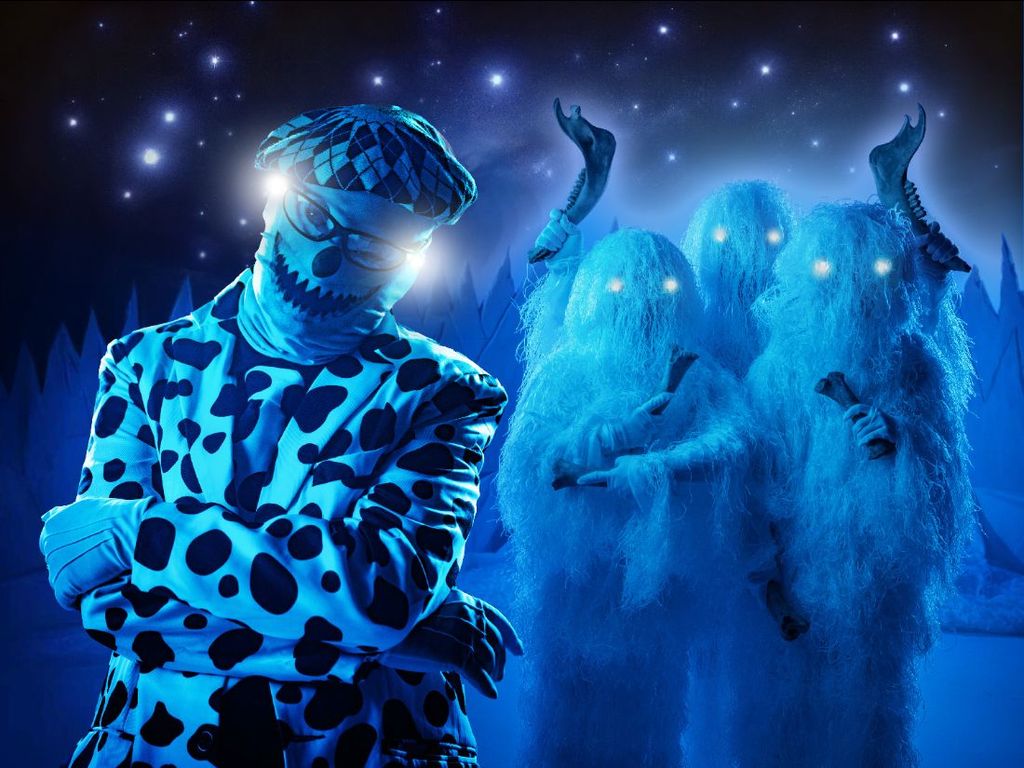
The group has spent decades combining music, film, animation, theatre, technology and visual art. Do you still see these as separate disciplines, or are they all simply different tools for creating a Residents work?
Personally, I see The Residents as collaboration; a group of artistes in the process of creating a singular body of work. While the results may consist of many different creative forms, it’s the whole that matters, not the individual constructs that constitute the work.
Anonymity has become one of the most recognizable aspects of The Residents. Has its meaning changed for you after more than 50 years?
Honestly, I see The Residents’ embrace of anonymity, which was there from Day One, as only having gained in value over the years; while celebrity, bloated and contrived by social media, sadly swells as a value of the human condition, leaving anti-celebrity as personified by The Residents’ anonymity, as a unique and singular value.
The anonymity can sometimes overshadow the music itself. Is there a danger that the mystery surrounding The Residents becomes more famous than the actual work?
Personally, I don’t see the “mystery” being as compelling in the current culture aa it was in the 70s and 80s but I suppose that could change if The Residents hit another streak of attention and popularity as they have at times in the past. If that happens, the mythology could potentially overshadow the work but it would only cause The Residents to pause for a moment, look around, yawn, then go about their business.
The Residents have influenced artists across several generations and very different genres. What do you think artists are actually responding to when they discover The Residents?
I think what other artists see in The Residents is originality. Every artist wants to see themselves as unique and original and The Residents are somewhat remarkable in that regard. Nothing they have done can be compared to anything else and while I see that as a major positive, it can also be a handicap. Some people dismiss what they can’t compare to anything else.
Looking across such an enormous catalogue, is there a Residents project that you feel has been overlooked or misunderstood and deserves another look today?
Two projects that come to mind to are ‘Tweedles‘ and ‘The Voice of Midnight‘. Tweedles has at its center a believable but fairly unlikeable character: an obnoxious but oversexed clown. The Residents saw it as basis for an interesting one man stage production that never happened. The Voice of Midnight, the other overlooked project, was based on The Sandman by the Prussian writer E T A Hoffman. Again, The Residents saw it as perfect music theater material for, but again, it never reached the stage.
‘Wormwood‘ remains particularly interesting to me because the live production became something different from the original album. Do you think a Residents work is ever truly finished, or does every new interpretation effectively create another version of it?
For the most part, while The Residents see an album as usually the first iteration of an idea, they almost always feel like it can be developed further. The best example of that is Freak Show, which started out as music, then became a comic book, a stage production and a CD-Rom. But I do think they do consider some projects, such as God in 3 Persons, as probably being finished. It’s also hard to see them doing more with their early albums like Meet the Residents, Fingerprince, The Commercial Album, etc.
You have been connected to The Residents and The Cryptic Corporation since the beginning. How has your own understanding of the project changed over those decades?
In a way I originally saw The Residents as similar to a group like The Who or Pink Floyd that started out fairly obscure but then developed an audience and became quite popular over time. Honestly, I don’t think I could have been more wrong. The Residents couldn’t care less about popularity and at this point, I believe you have to pursue commercial success on some level to achieve it – not that I think The Residents should have done anything different.
After more than five decades, what still surprises you about The Residents?
What surprises me is that people still care about The Residents and, after well over fifty years, I’m still doing interviews like this.
Do you still think of The Residents as a band, or has the project become something fundamentally different from the idea of a band?
While The Residents have certainly masqueraded as, and been successfully marketed and packaged as a band, I don’t see that as an honest label for a group that I see more as a hive mind, an artist collective whose work is much broader than just music. But, from a marketing point of view the term “band” has a lot of value, while “artistic hive mind” means zilch.
After 45 years of mystery surrounding Eskimo, what do you hope audiences will still be wondering about when they leave an Eskimo Live! performance?
I would hope the audience would leave wondering why more groups don’t pursue their own unique and singular vision. It’s available to everyone.
Christos Doukakis